Wednesday, November 24, 2010

The Giver

If you could, would you choose to live in a world where all of your decision were made for you? Would you welcome this world where every aspect of society was planned and organized so that everything was convenient and nothing was allowed to disturb the peace? At times, it may seem like it would be better to not have to make so many hard decisions, but would it be worth it?
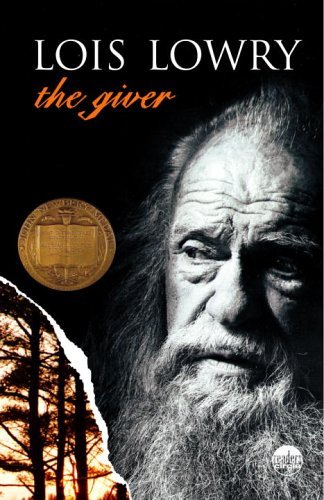

In this Newbery Award winning science fiction novel, The Giver, written by Lois Lowry, the main character Jonas grapples with similar questions. Jonas has always lived in a society where everything was decided for him, a society devoid of all pain, fear, war, and emotions. As is customary, at the Ceremony of Twelve, all children turning 12 are assigned their community jobs and begin the training for their new role. Everyone is assigned the job that the Elders believe they are best suited for and Jonas though interested in many can’t decide what his job may be. As the ceremony progresses and the names are read out loud, Jonas is skipped. He is filled with fear and shame at the thought that he had done something wrong, until a special announcement is made. Jonas will be the next Receiver of Memory and the society he knows now will be forever changed.  All of the strict community rules he’s learned and followed don’t apply to him anymore. How would you feel if you were told you could do the opposite of every rule you’d ever followed? Would you be excited, worried, or scared?

As Jonas undergoes his training with the current Giver by receiving the society’s memories, he starts to understand how shallow life in his community really is. The people may be living a peaceful existence with little to worry about, however how can they truly live without knowing both great joy and great sorrow? Unfortunately, Jonas doesn’t have long to grapple with these new ideas and must make a drastic decision. Flee the only society he’s ever known and leave his family unit behind for a life of color, emotion and danger, or stay locked away in the protective cage of his community knowing all the while that he’s not actually experiencing life in all its glory.

In this story, Lois Lowry paints a world so like and unlike ours that you get sucked right into it. Every aspect of their lives has been modified or controlled, even their genetics. For the purpose of sameness, everyone is colorblind to facilitate their inability to see differences, however Jonas gains the ability to see beyond, i.e. he can see color. Everyone in the community serves a needed role and all emotions, including love referred to as ‘Stirrings’, are subdued through a daily pill. All of these ideas are, as unsettling as they may be, plausible in our society. What sets this story apart from our world and enters it into the science fiction category is the ability of The Giver to hold and transfer all of society’s memories to another selected Receiver of Memories. Because of this realness Lowry creates as Jonas struggles with his new found knowledge, the reader also struggles with a similar question wondering if in their darkest times of sadness if a world of bland peacefulness would be worth the sacrifice.
With the turn of every page you go from a lighthearted world of harmony to a stressful and action filled story as the pretty veils of the society are lifted to reveal its dark side. So, which world would you choose?


It should be noted that this book does address some pretty heavy topics, and parents and teachers should be prepared for some potentially complicated questions. Because of this, I suggest this book for upper elementary students and above.


In my research of this book, I found that Lois Lowry had actually gained inspiration for this book from her aging parents. When visiting them in a nursing home, she would sit with her mother, who was blind at the time, and listen to her recount the stories of her life both very happy and very sad (the death of Lowry’s sister). She would also sit with her father who could see, but was losing his memory. With him she would go through photo albums and retell him who or what was in the picture. When she reached pictures of herself and her late sister, she had to explain to him that her sister had died and watch him grapple with the fact anew. This sad occurrence led her to think about the importance of memories and wonder about manipulating memories to only leave the happy ones. This inspired her to create the world of The Giver and introduce us to Jonas and his struggle.


To end on a lighter note and referenced in my previous Number the Stars blog post, Lois Lowry does offer some writing advice on her website and will even sign copies of her books if you contact her as suggested on the site.

Monday, November 8, 2010

 Number the Stars

How brave are you? Are you brave enough to risk your life for your best friend, all the while knowing nothing of what's truly going on? Annemarie doesn't know either, and she's afraid to find out.


Number the Stars, a Newbery Award winning novel written by Lois Lowry, revolves around a ten year old girl named Annemarie Johansen living in Denmark during the time of the Holocaust. The story starts off in the midst of Copenhagen's occupation by German forces, with Annemarie and her Jewish friend Ellen Rosen racing to school. On their way there, the reader gets a brief sense of their childhood whimsy before being dragged into the harsh reality of World War II, by two patrolling officers. Though nothing terrible happens at this point, the feeling of constant fear is injected into the story like a dark menacing cloud that threatens to storm at any moment. As the story progresses, the reader in swept back and forth between Annemarie's fun loving childhood and the grim reality of the world she currently resides in ,with the constant fear that her best friend Ellen will be taken away by Nazi soldiers at any moment. The tension and overall reality in the story mounts slowing and in waves, first with the closing of a Jewish button shop and then the midnight raid on the Rosen's home. Each passing scenario becomes a little more frightening than the last, until little Annemarie is making a mad dash through the woods with an unknown package in her arms.

I'm typically not a big fan of historical fiction, finding it to be a little dull at time, however this book was a real page turner! As each new wave of anxiety rises in the story you can't help but be sucked into it, and there you are right next to Annemarie knowing that even the smallest mistake could cost everyone their lives. Will they believe she's your sister? Will your youngest sister spill the beans? Are soldiers really waiting outside your window ready to snatch everything away from you? I honestly couldn't put it down!

Though this story delves into dark topics, it does so in a way that causes you to really think about them instead of shy away. Because of this, parents and teachers should be prepared to answer tough questions and address difficult issues involving war, humanity,  and friendship. The story itself briefly hints about the brutality of war, but mainly focuses on it from a child's perspective, which makes it a good read for upper elementary students. Many students in this age range will be able to connect with Annemarie and really understand her point of view as the story progresses.
Aside from the plot and darker topics addressed in the story, I loved how seamlessly it flowed through the main character, and how you could almost see the dawning realization taking place in Annemarie. Watching her grow up with such a positive and resolute attitude was mesmerizing, and caused me to wonder if I'd ever be able to cope with all of those things at once. I've had my fair share of life experiences, but could I really handle the pressure and situations with the same kind of quick thinking as the characters in this book? I'd like to think that if I were tested in that way, I'd be brave enough to run the gauntlet with the same determination, but I hope to never find out.


________________________________________________________

Lowis Lowry has written many other noteworthy books, including A Summer to Die, and The Giver (another Newbery medal winner), and seems to have a very open repoire with her reading audience. At her website she even offers to sign copies of her book, so long as they are sent with return postage. How cool is that!

Monday, October 25, 2010

Firegirl

 We've all been there before. We've all experienced it. The teacher announces that there will be a new student, and you immediately wonder who they are and what they'll be like. Will they be your new best friend? Will they be pretty? Will they sit next to you? A million questions pop into your head at once while the rest of the class buzzes with excitement. Now what if this student has suffered a terrible accident and doesn't look anything like you've seen before? How do you react?


The story Firegirl, winner of the Golden Kite Award and authored by Tony Abbott, carefully explores just that and follows the thoughts and actions of one particular boy name Tom. Tom is your average student and struggles to be accepted by his peers, as well as garner the attention of a particular girl in class. He doesn't want to stand out and is solely focused on this until the new girl comes to class. Jessica, the new girl, had been severely burned in an accident, and to her peers is barely recognizable as a human. During the course of a few short weeks, Tom find himself thinking about things that had never occurred to him before, and starts to see people in a different way. His peers, particularly his best friend Jeff, dream up cruel reasons for why she looks the way she does, and refuse to accept her or treat her as anything other than some foul creature. Tom is frustrated and torn; on one hand he wants to fit in with his class, but on the other hand he sees no good reason to treat her badly. As the story progresses, Tom becomes increasingly irritated by his friend's antics, and instead develops a close friendship with Jessica as he tries to see things from her perspective.

At first Tom is very reluctant to interact with Jessica, not because of the way she looks, but because of what the other kids would say. Eventually, he is asked to drop a homework assignment off at Jessica's home, which being from the judging eyes of his classmates, give him the opportunity to interact and speak with her and her family. From them he discovers the tragic event that so quickly turned their lives upside down, and starts to see things in a new light. In the past he'd spent each day thinking of a new way to catch his love interest's attention. Now, after discovering Jessica's past, he spends each day thinking of Jessica instead and ways to include her in the class.

One thing I found interesting about this realistic fiction book was how the author decided to present it to his audience. When writing it, he chose to do it from Tom's perspective, as though his sitting right there in front of you talking about exactly what happened. As you move through the pages you really connect with Tom on a personal level, because who hasn't had to decide between what they think is best and what the group thinks is best? You're right there with him watching him hesitate; watching him unknowingly make a huge difference in his own life and Jessica's. Even at the end of the book it seems Tom still doesn't realize the impact of what had happened, when he says "On the outside it doesn't look like very much happened. A burned girl was in my class for awhile. Once I brought her some homework. In class she said my name. Then she was gone. That's pretty much all that had happened", which is true, but so much more was going on within him. His one seemingly small gesture snowballed into a life altering experience.


Another interesting point I saw in the book, was how Tom and Jeff represented two sides to the same coin. Tom, had two loving parents in a stable home, and chose the side of compassion with Jessica. Each day when he came home his parents were there and supported him in every way. Jeff on the other hand chose to ridicule Jessica and came from a divorced family where no one was ever home when he got back from school, and neither parent seemed to provide much emotional support. This one little detail seems to imply, however delicately, that a supportive and loving environment may be the one thing that keeps kids thinking about their actions in the world around them, and being compassionate people.

Many young readers may be bored with this book if they simply go by the title and expect some sort of action, however this story does speak to older readers or anyone who's ever felt out of place or awkward. This book would be a great story for upper elementary students and above to read as they may already be feeling the effects of social pressures. This story could also be a good way for educators and parents alike to address the topic of personal perceptions, our differences, and how we should treat each other, as the book doesn't simply tell a story, it has you experience it.

Though the title of the book implies that Jessica is the focus, it is a really Tom who is the main character. The story showcases his inner struggle as a good kid just trying to be good while dealing with the social pressures of school. At first glance this story is not very thrilling, but when you realize how this one little event changed the perspective and life of Tom, you'll wonder what little events have shaped your own life.

_________________________________________________________ 
I would suggest that teachers and parents read this book along with their children and be prepared to address the sensitive topics presented inside. Though Abbott's description of Jessica and her accident isn't overly graphic, it is pretty detailed and does paint an image that may disturb some readers. Personally, I think it's very important to address his descriptions head-on as there will be many instances in real life where our children will come face to face with someone who is suffering in the same manner as Jessica.

Monday, October 11, 2010

Behold the Bold Umbrellaphant and Other Poems

Have you ever wondered what you’d get if you crossed a panther and a thermometer? How about an umbrella and an elephant? Well, it just so happens that you’re in luck, because author Jack Prelutsky and illustrator Carin Berger have answered those questions in their book, Behold the Bold Umbrellaphant and Other Poems.


 In this very creative and amusing collection of poems, Prelutsky tells of wonderfully inventive creatures and their unique abilities. Each of the 17 poems sprang from the author’s imaginative pairing of an inanimate object and a real animal, like the ever on time Clocktopus. Each of the poems has been created with a strong rhythm and can automatically be read in a sing-song manner, even in your head! Most of the poems are also written in rhyming line pairs, which creates a smooth transition from one poem to the next.

If you thought that the poetry was the only thing in this book to get your creative juices flowing, you’d be wrong because the illustrations take Umbrellaphant to a whole new level. To create the illustrations, Carin Berger used a cut paper collage method to model the creatures in the book, effectively taking actual bits of paper (ticket stubs, catalogs, etc.) and molding them into the shapes of real life animals, albeit with new man-made appendages.

I think this collection is a great way to introduce elementary students to the silly and imaginative side of poetry. After reading these poems you could ask your students or children for that matter, to think of their own animal-object combo and create their own poems, which as Jack Prelutsky is quick to point out on his website, don’t have to rhyme! He says that learning how to play with the rhythm of words and how to arrange your ideas is the most important concept when you’re just beginning to write poetry. I love that he went out of his way to say this, because as a child sorting through and finding all the right rhyming words can be a daunting challenge in and of itself.

Personally, I thoroughly enjoyed this collection of poems and would definitely recommend it to elementary students grade 3 and up, particularly because some of the vocabulary could be challenging for younger children. However words like resplendent and reverberate would also create a great segue into other language arts lessons. So, go out, pick up this book and introduce, or reintroduce, someone to the fun poetry they're missing!


Tuesday, September 28, 2010

The Hare and the Tortoise: and other Fables of La Fontaine


What do fables, folk tales, fairy tales, tall tales all have in common? They're wonderfully imaginative stories that tell a lot in a few short pages, that's what! Lucky for you, I stumbled across a colorful collection of fables at my local library! The Hare and the Tortoise: and other Fables of La Fontaine, illustrated by Giselle Potter and translated by Ranjit Bolt is a collection of fables originally adapted by Jean de La Fontaine, a French poet. 
 

A fable is typically a short story where the characters are animals that talk and act like people, and usually ends with a moral lesson. The word fable actually comes from the Latin word “fabula” meaning story. 

Many of these fabulous stories actually started as a collection of stories written in Sanskrit, known as the Panchatantra, for the children of royalty. People thought that these moral stories were so fantastic that many cultures translated them into their own languages to pass on to their children, which brings us back to Jean de La Fontaine. He based many of his fables on the French translations of these stories as well as Aesop's Fables., but made them his own by presenting them in rhyming verse.
 
    As has been the tradition, these fables have traveled the world from culture to culture, even time itself, and have now been reinvigorated yet again by Bolt and Potter in this 19 story collection.

    The book itself starts off with the classic fable, The Hare and the Tortoise, and continues to introduce the reader to many wonderful creatures and moral lessons as you progress through the pages. What really struck me about this book, and was the actual reason I chose it, were the illustrations. The bold and colorful pallet Potter chose for the illustrations draws your hands to the book almost magnetically, and keeps you turning the pages even after you've finished reading! She also utilized the entire space on every page and filled them with color. Because she illustrated it with a paintbrush, you can almost feel the movement created by her brush strokes. This added energy breathes life into the little creatures on the pages, and adds a whole new dimension to the sing-song verses that flow through the book.

     Unfortunately, I did occasionally have trouble getting the verses to sync up, both in rhythm and rhyme, which at times forced me to repeat several lines and twist/force them to fit together. I also found that some of the stories seemed to send conflicting messages with their morals. A few left me with the message that I should definitely not trust strangers, while others seemed to tell me that I definitely should help strangers as they may help me later on. This conflicting message from story to story may be confusing to some, especially children.

     To end on a positive note, I'd like to share a little of one of my personal favorites in this collection titled The Wolf and the Watchdog. This fable is about a hungry wolf and a well fed watch dog who gets all the food and love he could want. The wolf, however, is almost skin and bones, but has one thing the fat little watchdog will never have. If you want to find out what that one thing is you'll have to read the fable yourself, and you'd better use your sing song voice too...it's just more fun that way!

Saturday, September 11, 2010

Fancy Nancy


Fancy Nancy, a picture book written by Jane O'Connor and illustrated by Robin Preiss Glasser, is about one little girl's efforts to teach her ordinary family how to be fancy.

Nancy “believes more is ALWAYS better, when it comes to being fancy”, but her family just doesn't understand. Lace-trimmed socks really do help you play soccer better!  Finally after many failed attempts of fancy intervention, she gets the idea to teach her family how to be fancy. With Nancy's help and unique accessories, they are transformed into an extraordinarily posh looking family wearing a plethora of bows, flowers, and feathers.

The illustrations (a fancy word for drawings) in this book are well done and include all the details a fancy person might want to see, including sparkles on the cover! Glasser does an excellent job of showcasing Nancy's creative spirit and glamorous sense of style on each page. To do this, Nancy is the most colorful character on each page, covered head to toe in all shades of fuchsia (Nancy's fancy way of saying purple), while her family and home are composed of simple greys and browns.
The writing style of O'Connor is also wonderfully well done and provides a clear window into Nancy's ornate world, while hitting home with a sweet, simple, family message. As the story progresses O'Connor uses many fancy words to replace the plain ones, and by doing so, breathes more life into Nancy's ornate personality. This use of vocabulary also serves as a great segue into lessons about synonyms and the many wonderful adjectives out there.

Fancy Nancy is a wonderful story for anyone, children and adults alike, needing some fashion inspiration without adding any unnecessary princess ideals, and is just one part of the popular series of Fancy Nancy picture books. So put on your laciest socks, nestle into your coziest seat, and get a little fancy!

Kitten's First Full Moon

Have you ever wanted to reach out and touch the moon or stars? In Kitten's First Full Moon, a Caldecott Medal winner, by Kevin Henkes, a persistant little kitten tries to do just that.

     This picture book is about an inquisitive kitten's first experience seeing a full moon. The story opens with Kitten sitting on her front porch enjoying the night. Through a group of fluttering fireflies, she sees a purrfectly deliciousl bowl of milk hanging in the sky, and tries with all her kitten might to taste it, catch it, and drink it! Will this unlucky kitten ever get her little bowl of milk?

     The illustrations for this picture book contain no color, but instead use muted blacks and whites to envelope the reader in the story's own “colorful” nighttime atmosphere. The simple drawings also complimented the tenacious kitten's story well, with the moon always being just out of reach at the top corner of the book. Once the story is over it will leave you peering outside your window for a wayward kitten on her quest for a nighttime snack.
   

One unique way to utilize this story at home or in a classroom is as a way to introduce readers to the different phases of the moon and what objects each phase resembles to them. Readers could even write their own stories of what they think other animals do on nights with a full moon.

Kevin Henkes is an experienced children's book author, having published his first book at the age of 21. He now has over 30 books under his belt and several awards to boot. His inspiration for this story actually came from a line in a previous book idea that didn't make the cut. Lucky for us, Henkes expanded on this one line to create a wonderful story about Kitten's first full moon.


      Other wonderful stories by Kevin Henkes include the Mouse book series, Old Bear, and A Good Day.